
Trezor.io/Start® — Starting Up Your Device | Trezor®
Trezor.io/start offers helpful guidance for starting with Trezor, from device setup and wallet connection to crypto account management and asset tracking.
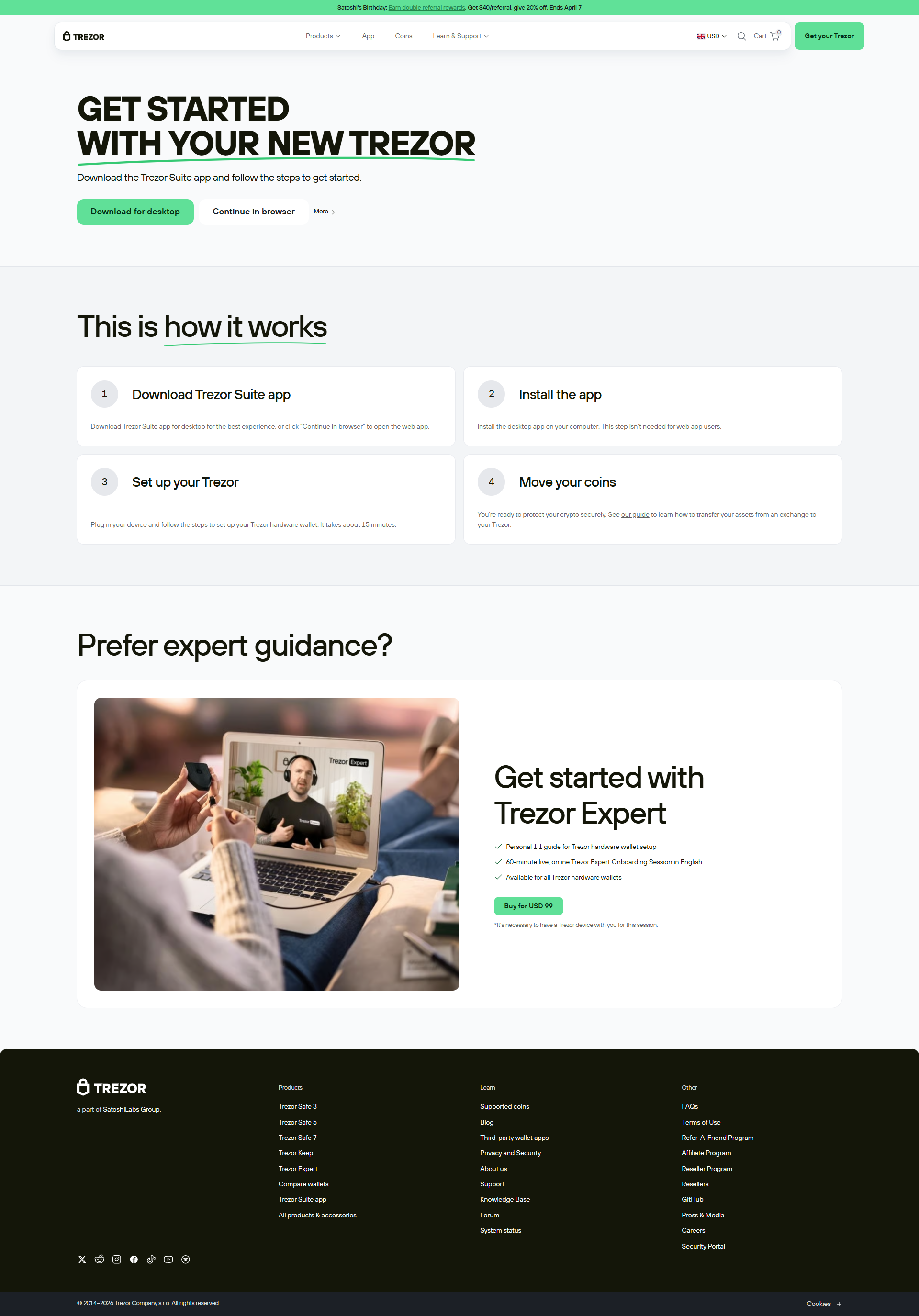
Trezor.io/start: A Beginner's Guide to Trezor Wallets
Buying a hardware wallet is only the beginning of your self-custody journey. The next step is learning how to configure the device and use it responsibly. Trezor.io/start can serve as a starting point for users who want to set up their Trezor wallet and understand the basic security principles behind it.
Start With a Secure Foundation
Use official Trezor instructions when setting up your device. The correct setup process depends on the hardware model and software you are using, so follow the relevant guidance instead of relying on random online tutorials.
A careful setup helps you understand your wallet's recovery process, account structure, and transaction-confirmation workflow.
Explore Trezor Suite
Trezor Suite provides a software environment for interacting with compatible Trezor devices. Depending on current support, users can use the wallet interface to view assets, manage accounts, and perform supported crypto activities.
Possible functions include:
- Monitoring crypto balances
- Sending and receiving supported assets
- Reviewing transaction history
- Managing wallet accounts
- Checking available services
- Confirming transactions on the Trezor device
The features available to you depend on the cryptocurrency and current Trezor support.
Advantages of a Hardware Wallet
A hardware wallet is designed to keep important wallet credentials protected by a dedicated physical device. It also gives users a separate place to review transactions before authorization.
For someone new to self-custody, this can create a more deliberate process for handling cryptocurrency rather than approving transfers without checking the details.
Stay Alert to Crypto Scams
Technology alone cannot protect users from every type of threat. Phishing websites, fake support accounts, malicious links, and social-engineering attempts can still create risks.
Never reveal your recovery seed. If someone asks for it to fix a wallet, verify an account, unlock funds, or complete a security check, do not provide it.
Use official Trezor resources when you need assistance and be cautious with unsolicited messages.
Make Verification a Routine
Before signing a transaction, take a moment to verify what you are authorizing. Check the recipient address and amount, then review the information shown on your Trezor device.
If the details do not match your intention, stop before confirming.
FAQs
Why should I use Trezor.io/start?
It provides a starting point for learning how to configure a Trezor device and begin using its wallet environment.
What is a recovery seed?
It is sensitive wallet recovery information that must be protected from unauthorized access.
Can Trezor Suite manage multiple assets?
Trezor Suite supports various cryptocurrencies and wallet functions, although availability depends on current asset support.
Does using a hardware wallet guarantee security?
No. Users still need to protect recovery information and recognize phishing, scams, and suspicious transactions.
Conclusion
Setting up a hardware wallet is an important step toward understanding crypto self-custody. Trezor.io/start can help new users approach that process in an organized way.
Start with official guidance, learn the wallet workflow, keep your recovery seed private, and make transaction verification a regular habit.
Additional Resources
- Trezor device setup resources
- Trezor Suite guides
- Crypto self-custody education
- Recovery seed security information
- Transaction verification guidance
Updated about 6 hours ago